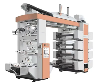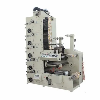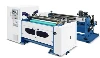
The core working principle of gravure printing is based on the ``gravure ink storage and pressure transfer"physical mechanism. Its workflow and flexographic and offset printing in the quality of the following differences:
I. Core Working Principle of Gravure Printing
** Editing stage:** Cracks of varying depths are formed on the surface of metal printing roller (e.g., copper, steel) by chemical etching, electronic etching, or laser engraving. The crater was the same shape and patterned detail. For example, solid pattern pits are deeper and fine pattern pits are shallower. The size of ink depends on the depth of the pit.
Ink and scratches
** Ink:** Dip the printing roller into a groove or inkjet to fill it with ink.
Scratch: A high-precision doctor's blade (such as steel or ceramic) that scrapes excess ink from the surface of a printing roller at a fixed angle and pressure, leaving the ink in a groove to create a clear image outline.
Impression Transfer: substrate (such as plastic film, paper, aluminum foil, etc.) through the printing roller in close contact with the impression roller. Under pressure, the ink in the groove is transferred to the surface of the substrate to complete the printing process. Drying and curing: Depending on the type of ink (solvent, water-based, UV), ink dries quickly through hot air circulation, infrared heating or UV exposure to prevent adhesion or staining.
ii. Basic differences between gravure, flexo and offset printing
1.Plate Structure and Ink Transfer Method
Gravure Printing:
Print plate: Metal rollers; image region concave, non-image region convex.
Ink Transfer: Ink is only stored in the groove, in pressure directly transferred to the substrate, ink layer is relatively thick (usually 3-10 microns), resulting in high color saturation.
Features: Low printing cost, but wear and chemical corrosion resistant, suitable for long-run printing (e.g., food packaging, cigarette labels).
Flexographic Printing:
Printing plate: Flexible resin plate (e.g. rubber or photosensitive polymer); image region elevated, non-image region dented.
Ink Transfer: Ink is transferred quantitatively from an anilox roller to the plate and then from the raised area to the substrate. The ink layer is relatively thin (1-3 microns), suitable for short-term printing. Features: Low cost of plate making, quick plate changeover, but printing accuracy and durability slightly lower than gravure printing. Commonly used in corrugated box and label printing.
Offset
Plate: coated with photosensitive resin on a metallic aluminum substrate. The image region is hydrophilic and the non-image region is hydrophilic.
Ink transfer: through the blanket for Indirect transfer, ink first from the printing plate to the blanket, and then from the blanket to substrate. The thickness of the ink layer thickness is between gravure and flexographic printing.
Features: High resolution (200 lines/inch), suitable for multi-color printing (magazines, posters, etc.), but requires precise ink balance control and sophisticated equipment.
2. Printing pressure and Substrate Adaptability
Gravure Printing
Pressure: impression roller in the plate roller to apply considerable pressure (usually 5-10 kg/cm2) to ensure ink in the groove.
Substrates: suitable for plastic, aluminum foil and other soft materials. Paper can also be printed, but requires a highly uniform thickness.
Flexographic Printing
Pressure: Low pressure (1-3 kg/cm2), ink volume controlled by an anilox roller to reduce substrate deformation.
Substrates: Adaptable, able to print on materials of different thickness (e.g. corrugated paper, self-adhesive labels), even curved or irregularly shaped surfaces.
Offset
Pressure: Moderate pressure (3-5 kg/cm2), cushioned by a blanket to reduce impact on the substrate.
Substrates: Mainly used for paper, especially smooth, flat coated or offset paper; sensitive to material thickness and surface roughness.
3. Cost-benefit comparison
Gravure Printing
Editing costs: High (engraving metal rollers required, long cycle), but long lifespan of a veneer (millions of prints).
Printing speed: High-speed models can reach between 400m and 60m/min, suitable for mass production.
Environmental impact: Volatile organic compounds (VOCs) emissions from Solvent-based inks are high, requiring relevant waste gas treatment equipment; water-based and UV inks are becoming increasingly popular.
Flexographic Printing
Sewing costs are Low (flexographic plates are produced quickly and with a short cycle), but single plates have a relatively short service life (about 500,000 to 1 million copies).
Printing speed: medium to high speed (150-300 m/min), suitable for short to medium term orders.
Environmental protection: Water ink widely used, low VOC emissions, consistent with the development trend of green printing.
Offset
Copy preparation costs: Moderate (CTP copy preparation technology reduce costs, but multicolor printing requires multiple copies).
Printing speed: Medium speed (8,000-15,000 copies perhour) for multi-color, high-precision printing.
Environmental protection: need to control ink balance to reduce solution contamination; UV offset printing allows immediate drying, reducing energy consumption.
III. Abstract: Core differences between the three
Gravure Printing: to ``gravure ink storage "as the center, emphasizing ink thickness and color saturation, suitable for long-term use, high durability requirements. Flexographic printing: Focused on flexibility and low cost, Flexo + anilox rollers is suitable for short-run environmental applications.
Offset printing: to ``indirect transfer + ink balance "as the core, emphasizing resolution and registration accuracy, suitable for multi-color, high-precision printing.
Feb 01, 2026
Leave a message
What Is The Core Working Principle Of A Gravure Printing Press? What Are The Essential Differences Between It And Flexographic Or Offset Printing?
Send Inquiry