

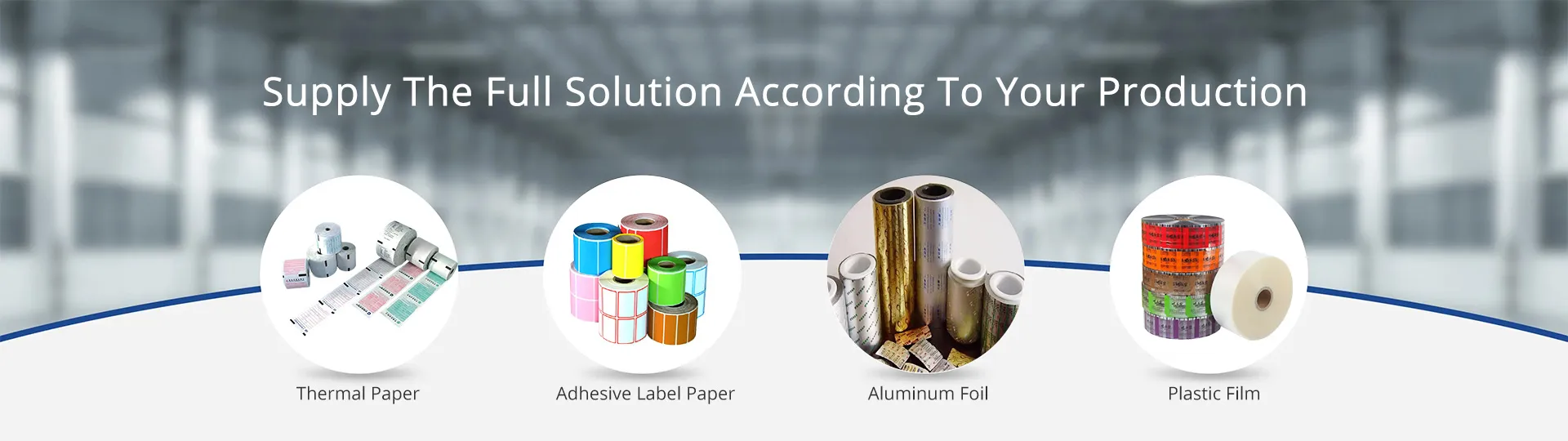
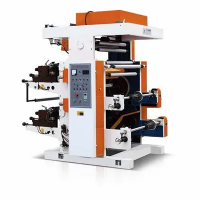
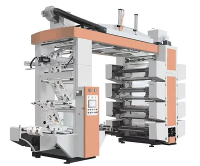
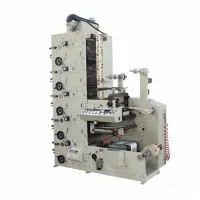
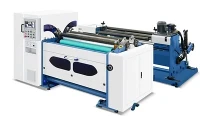
Gravure Printing Machine
What is Gravure Printing Machine
Gravure printing-also known as rotogravure printing-is primarily a long-run, high-speed, high-quality printing method. Like engraving, gravure is a form of intaglio printing that produces fine, detailed images. It works well for CMYK printing where each color of ink is applied by its own cylinder and with drying steps in between. Like flexography, gravure printing predominates in the high-volume printing of packaging, wallpaper and gift wrap.
Advantages of Gravure Printing Machine
High-quality Printing
Gravure printing uses engraved cylinders in India that offer exceptional image reproduction and fine detail. It produces sharp and vibrant colors, making it suitable for high-end applications that require high print quality.
Consistency
Gravure printing maintains consistent quality throughout the print run. The engraved cylinders used in the process ensure uniform ink distribution, resulting in consistent color and image reproduction across all prints.
High-speed Production
Gravure printing is a fast process, particularly when used for long print runs. It can handle large printing volumes efficiently, making it ideal for mass production and high-speed printing requirements.Wide Range of Substrates. Gravure printing can be performed on a variety of substrates, including paper, plastic films, foils, and metallic surfaces. It offers versatility and can be used for diverse applications such as flexible packaging, labels, wallpapers, etc.
Special Effects and Finishes
Engraved rotogravure cylinders in India allow for the application of various special effects and finishes, such as metallic inks, embossing, varnishes, and coatings. This versatility enables the creation of visually appealing and customized printed materials.
Why Choose US
Our Factory
Established 1999,name wenzhou jinghua machinery co.,ltd.exported machine to pakistan in 2007, exported machine to bangladesh 2008, exported machine to egypt 2009. and many other 50 coutries in these years.
Our Product
Dry laminating machine and other common machine. One is for customerized machine, such as foil printing machine, foil slitting machine, wax coating machine,PVC wall paper machine and so on.
QUALITY ASSURANCE
Two work-shop. One is for gravure printing machine, slitting machine,dry laminating machine and other common machine.
Our Service
We sincerely welcome friends from all over the world to cooperate with us on the basis of long-term mutual benefits.

In gravure printing, an image is acid-etched on the surface of a metal cylinder-one cylinder for each color-in a pattern of cells. The cells are recessed into the cylinder, unlike relief printing or letterpress where the printing image is raised or like offset printing, in which the image is level with the plate.
The cylinder is etched with cells of different depths. These cells hold the ink that is transferred to the substrate. The dimensions of the cells must be precise because the deeper cells produce more intensive color than shallow cells.
The cells are filled with ink, and the non-printing portions of the plate or cylinder are wiped or scraped free of ink. Then paper or another substrate is pressed against the inked cylinder on a rotary press, and the image is transferred directly to the paper, unlike in offset printing, which uses an interim cylinder. The engraved cylinder sits partially immersed in the ink fountain, where it picks up ink to fill its recessed cells on each rotation of the press.
Gravure printing is widely applied in the packaging industry and is mainly applied in the plastic film packaging industry. All kinds of packaging for products and food such as dishwashing soap, detergents, confectionery or coffee are printed with this intaglio printing technique. Moreover, gravure printing is also applicable on many different materials such as paper, thin metal, flexible plastic film, MPET, PE, OPP, PET.
Step 1: Design the model
This step requires the designer's sophistication to come up with eye-catching images/writing/messages that are appropriate and can create a strong impression for the product.
Step 2: Create prints
When the product design file is available, the printing department will make gravure prints by engraving on the gravure surface.
Step 3: Arrange and position printing mold
This step helps arrange printing materials on the printing molds consistently and optimally to save production costs and reduce printing costs, thereby being cost-effective and providing cheap gravure printing products.
Step 4: Print the image
Based on the principle of gravure printing, the machine is started then proceeds to print the images onto the paper materials chosen by the customer. It is worth noting that sample products should be printed first for evaluation and adjustment so that they meet the requirements before continuing to mass print.
Step 5: Make box dies to help shape the packaging
Since gravure printing is mainly roll printing, there is no finished product as often seen with offset printing. The purpose of making box dies is to shape the packaging by mounting the cutters and grooving knives on a piece of wood creating a die, cutting and grooving the printed sheet that is designed as a box, or cutting it into sheets of labels for a particular brand.
Step 6: Process printed sheets to become final products
In this step, the production unit will glue the edges, remove the excess and error, then attach the straps to the packaging to create the final product and deliver it to the customer.
What Is the Main Structure of the Gravure Printing Machine
The main structure of the gravure printing machine is composed of five parts: paper feeding, ink feeding, printing, drying and paper delivery.
In the paper feeding part, the sheet-fed gravure printing machine is a stack-type single-sheet continuous feeding, and the web-fed gravure printing machine uses the web to continuously feed the paper.
The arrangement of the plate cylinder and the impression cylinder in the printing part has three types: vertical, horizontal and inclined, and the plate cylinder is arranged at the bottom. Generally, each unit has 1 plate cylinder and 1 impression cylinder. In order to increase the printing pressure, some are equipped with 2 impression cylinders.
The ink feeding device includes direct ink feeding, which partially immerses the printing plate cylinder in the ink groove, and indirect ink feeding, which transfers the ink to the printing plate cylinder by the ink outlet roller immersed in the ink groove. ink method.
The drying part uses hot air heated by electricity or steam, and some use infrared or far-infrared lamps to dry the printed matter.
In the paper delivery part, single sheets of paper are piled up into piles, and rolls of paper are piled up by cutting and folded paper tapes or rewinding them into rolls. The structure of the printing part of the web multi-color gravure printing machine is two types: organic type and satellite type. The former is to set the unit according to the required number of colors, each unit has 1 printing plate cylinder and 1-2 impression cylinders, and the paper delivery part adopts the rewinding method. Satellite type four-color gravure printing machine, the printing part has 1 large impression cylinder and 4 sets of printing plate cylinders. There are also combinations of gravure printing with lithographic or letterpress printing, die-cutting, etc. to meet the different requirements of printed matter.
Prepare Before Printing -Rotogravure Printing Machine


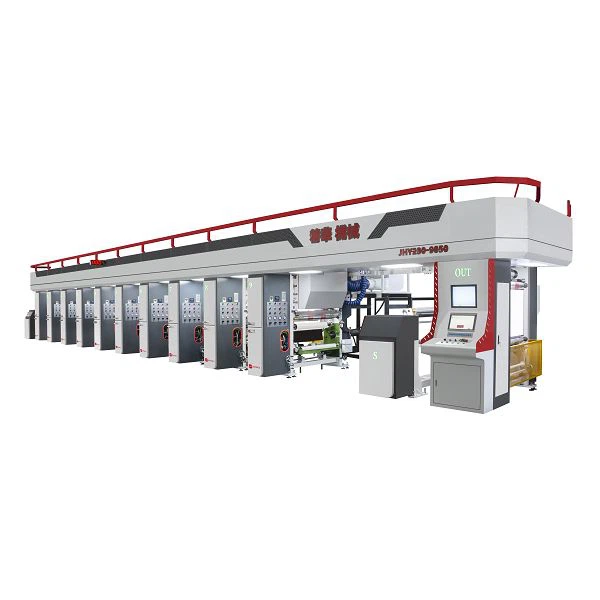

Check whether there is dust, garbage and sundries irrelevant to printing around the printing machine, and check whether ventilation and exhaust facilities are in good condition.
Check whether the raw and auxiliary materials are ready and whether they meet the printing requirements. The plastic film for printing need meets the following requirements:
Smooth surface, no obvious hard block, yellow black spots, holes and excessive wrinkles.
The average thickness error of the film to be printed should be less than 10% (at 1m printing width). The formula for calculating the average thickness error will be found in the requirements for dry composite substrate film. Under printing pressure, the elongation of the printed film should be within 1%; The surface tension of substrate film should be ≥40 dyn/cm; The affinity between the substrate and the printing ink is known in advance. For the film that is easy to dissolve and swell with the solvent in the printing ink, the printing speed and the concentration of the printing ink can be greater. When printing the coating of the coating film, we should know how the adhesion of the coating resin to the ink.
Check the quality of the plate roll. Note that the latter group of color plate roller should be slightly larger than the previous group of color. For example, the circumference of the second plate roller should be 1% more than the circumference of the first plate roller, at least slightly larger or slightly equal, not less than the first plate. Otherwise, can not accurately overprint. Check the pattern and color code of the reel.
Check whether all parts of the printing machine have card material problems, including transfer printing, feeding, drying, inking, traction and winding, lubrication part is filled with lubricating oil, oil is smooth. Are the instruments in good condition? If there is an automatic ink viscosity controller on the equipment, the ink viscosity should be adjusted to the preset value of 14~18s, and poured into the mixed solvent.
Mix ink, choose the same primary color ink with the proofing color standard.
Gravure Printing Production Line Technology
Printing units and printing process
Each print unit comprises:
Printing cylinder: A seamless tubular sleeve or full cylinder, of either steel, aluminum, plastic, or composite material, engraved with the color dedicated pattern of the image to be printed.
Doctor blade: The device that removes ink from the non-engraved portions of the printing cylinder and excess ink from the engraved sections.
Impression roller: A rubber covered sleeve mounted on a steel mandrel. Its primary purpose is to press the substrate against the printing cylinder.
Inking system: Consisting of an ink pan, ink reservoir, and ink pump with its dedicated hose set.
Dryer: Air chamber or device that is to dry or polymerize inks by means of hot air or UV rays; before the next downstream color is applied on the web. Dryer capacities are determined based on the required printing speed, ink type, and ink lay down volume.
During the gravure printing process, the printing cylinder rotates, while being partially immersed in ink. The engraved cells fill up with ink and as the cylinder rotates clear of the ink pan, any ink excess is removed by the doctor blade. Rotating further, the ink-filled cells are pressed against the substrate by the impression roller, each then releasing their ink. The empty cells are plunged back into the ink for the next revolution.
The pressure of the roller, combined with the capillary draw of the substrate, create the direct ink transfer from the cell to the substrate.
As the printing roller rotates back into the ink pan, the printed area of the substrate proceeds through a dryer and onto the next printing unit, for another color, varnish of coating.
Precise color-to-color registration is achieved with automatic longitudinal and lateral integrated register control systems.
Converting units and converting processes
After each color has been printed and any coatings applied, the web travels on for converting, which may include different processes depending on the end users' markets. These may include die-cutting, punching, creasing/scoring, embossing/de-bossing, and piling, sheeting or rewinding. These are the dedicated converting units:
Rotary die-cutter: Rotary die-cutter : suited for high production volumes, such as tobacco and liquid packaging industries.
Flat-bed cutter-creaser: Delivering high levels of flexibility for medium to long runs, the flat-bed converting process is mainly used for tobacco and general folding carton industries.
Sheeter: Converting the printed web into individual sheets, this unit allows further off-line processing such as hot-foil stamping, silk screen printing, offset overprinting or further die-cutting.
Rewinder: Delivering the web to a reel allows further reel-to-reel processing like adding value to cigarette soft packs and labels.
Rotogravure Printing Machine and Flexo Printing Machine
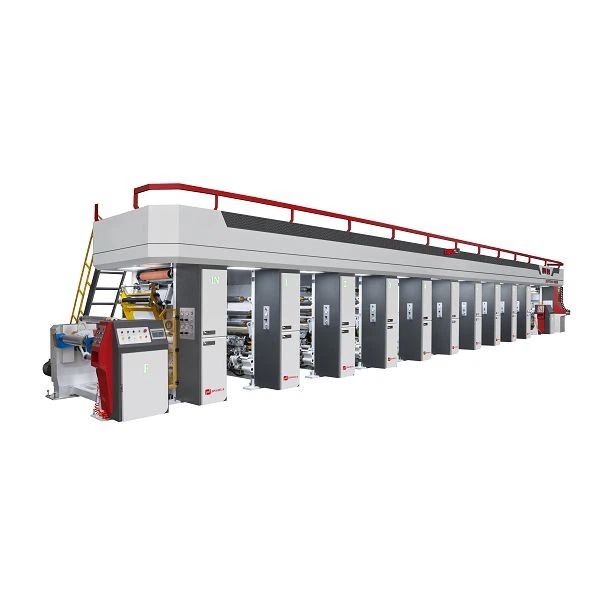
Rotogravure printing Machine
Gravure printing is a direct printing method, it will gravure pit containing ink directly imprint onto the substrate, the shade level of the printed picture is determined by the size and depth of the pit, if the pit is deeper, it contains more ink, imprint imprint substrate left on the ink layer is thicker; On the contrary, if the pit is shallow, the amount of ink is less, imprint substrate left on the ink layer is thinner.
Flexography Printing Machine
The principle of flexo printing is relatively simple. In flexo printing, the ink feeding device of the press distributes the ink evenly, and then transfers the ink to the printing plate through the ink roller. Since the pattern design part of the printing plate is much higher than the non-graphic part of the printing plate, the ink on the ink roller can only transfer to the graphic part of the printing plate, and the non-graphic part has no ink.
How to Perform Troubleshooting on Gravure Printing
Fixing the hue shift
Consult the department of cylinders first. Verify the register and that the cells are set up correctly. Adjust the electric eyes, then turn down the dryer's temperature, and finally fill the fountain with new ink (and add less slip compound).
Address drying issues
When ink dries on the cylinder walls, it is known as drying in. There are normally only two reasons for this: improper press conditions or ink that dries too quickly. There are several things you may do to improve the press conditions, including:
Examine the oven's temperature, air flow, and blade angles.
Clean the cylinder, take away the attached spot air system, Aerated fountains, increase the press's pace.
Add a slow-drying solvent, reduce the viscosity, and alert the ink provider if the ink is drying too quickly.
Have a plan for dealing with an uneven appearance
The paper surface, big cells in the cylinder, pressure on the impression roller, and too thin ink can all contribute to the formation of dark and light patches that are referred to as puddling, mottling, and volcanoes. The problem may be resolved by adjusting the roller, consulting the cylinder department, or altering the ink viscosity.
Quit scuffling your tracks.
The ink itself, the press environment, or the paper are likely to blame for any scratches or scuffs in the ink.
What you can do to solve the issue is as follows:
Add hardeners or wax to the ink.
Examine and correct the ink viscosity.
Change the solvent system to improve the integrity of the ink film.
Boost the oven's setting.
Verify the paper's abrasion.
Don't Allow a Strike-Through to Depress You
Increase the ink viscosity, oven temperature, and airflow while lacquering the cylinder and adding a pigment extender. If it doesn't solve the issue, it might be the paper itself, and the solution is to use less absorbent paper. If not, it might be the ink holdout, in which case you should speak with the producer.
Modifying Color Intensity
By lacquering a portion of the cylinder to reduce cell capacity, speaking with the cylinder department, adding solvent to lower the ink's viscosity, and adding a clear extender, you can fix the issue of too much color.
The following are some potential fixes when the color is too weak:
By re-etching the cylinder, increasing cell volume.
Raising the viscosity of the ink.
Cylinder cleaning.
Diminishing the angle.
Swapping out the roller.
Removing toner.
Examining the automatic ink batcher.
Increase Ink Volume
Enhance the starting process to minimize waste, use less absorbent paper, modify the ink-solvent ratio to achieve the required viscosity, reformulate the ink if it is absorbing the stock too quickly, and inquire with the manufacturer about the ink gravity values.
Prevent Frothing and Foaming of Ink
First, instead of letting the ink fall, try introducing it to the pan through a hose. Next, check the pump for leaks or slow down the pump to minimize agitation. You might also experiment with changing the ink's viscosity or adding a defoamer substance.
Modify Gloss Levels
If the gloss is too high, either use a coloured extender or add a solvent to lessen viscosity. Add a gloss extender, raise the viscosity, or use less solvent to increase low gloss.
Make sure color reproduction is consistent
Here are several ways to troubleshoot color fluctuation, which can be caused by a variety of problems:
For all operators, adopt a single set of processes.
Utilize measured amounts only.
Calibrating or equating the flow rates
Inspect and clean the machinery in between presses.
Use inks with similar strengths.
FAQ