

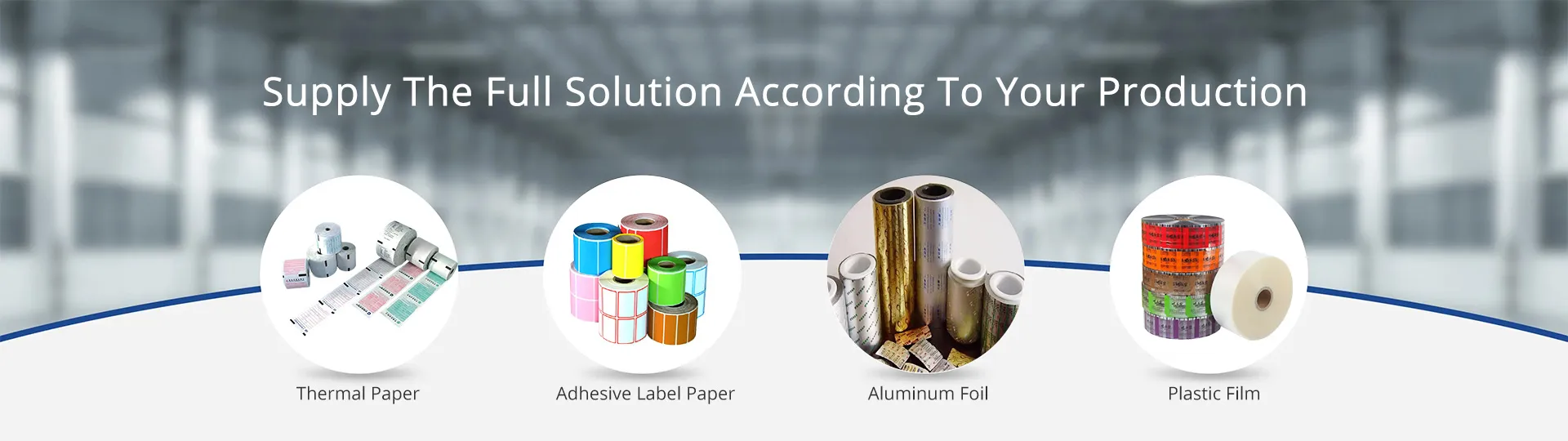
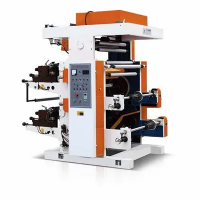
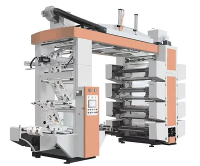
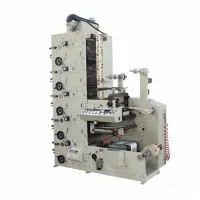
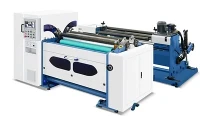
Flexo Printing Machine
What is Flexo Printing Machine
The Flexographic (flexo) printing press is one of the most efficient and consistent printing tools that we have in the market today, for all medium & long run print applications.Flexo continues to be the most popular of all web-fed technologies that has been deployed throughout the printing industry. A flexo press uses flexible photopolymer printing plates to imprint images across a wide range of surfaces, making it one of the most efficient methods for large volume requirements.


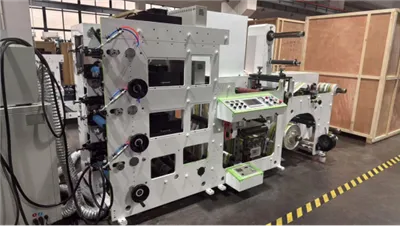


Advantages of Flexo Printing Machine
Versatility
Flexographic printing can be used to print solid colors and patterns on a wide range of substrates, including materials that are porous, non-porous, flat, rough, absorbent and non-absorbent. In addition, if a C.I. configuration is used for the print setup, it allows for superior color-to-color registration on extensible substrates.
Wide variety of inks
Speaking of versatility, flexography allows the use of numerous ink types for the printing process. They are also chosen according to the type of application and the processes that follow the printing (heat sealing, lamination, etc.). However, it is crucial to select the ink primarily on the basis of the final product you want to obtain.
High Performance
Flexographic printing is known for being a fast process. Once the initial setup is complete, the combination of quick-drying inks and automation result in very high performance. Thanks to the doctor blade chamber, only the necessary amount of ink will be applied uniformly on the printing plate, minimizing ink consumption, saving resources and reducing process costs.
High quality image reproduction
Despite the high speed of the flexographic printing process, over the past decade, the quality of the images that come off a flexo printing press have grown to match that of rotogravure printing. Past image problems, like the halo effect or dot bridging, have been replaced with images and text that are clear and detailed and colors that are bright and crisp.
Why Choose US
Our Factory
Established 1999,name wenzhou jinghua machinery co.,ltd.exported machine to pakistan in 2007, exported machine to bangladesh 2008, exported machine to egypt 2009. and many other 50 coutries in these years.
Our Product
Dry laminating machine and other common machine. One is for customerized machine, such as foil printing machine, foil slitting machine, wax coating machine,PVC wall paper machine and so on.
QUALITY ASSURANCE
Two work-shop. One is for gravure printing machine, slitting machine,dry laminating machine and other common machine.
Our Service
We sincerely welcome friends from all over the world to cooperate with us on the basis of long-term mutual benefits.
Types of Flexo Printing Machine
CI flexo machine
The setup of a CI flexo machine is sometimes compared to the planets’ path around the sun, as the stations are set up around the cylinder. This particular setup is ideal for large jobs as the machine is set up for increased capacity.The CI printing machine works on various substrates and is particularly useful for wide widths. A typical CI press is a six-color press. The press maintains a consistent level of pressure with low vibration, which in turn provides reliable prints over the course of a high-capacity run.
In-line press
An in-line press is the most common flexo press in print houses handling commercial product packaging. It also handles a variety of substrates and involves six components. this press has stations in a sequential line rather than a circular configuration. The lineup is handled along a horizontal line instead of vertically.
Stack press
The stack press is set up with stations arranged vertically. Most stack-type flexographic printing presses average between six and eight decks. They can be set up to allow both sides of a substrate to be printed during the same trip through the stack-type flexo press. However, the stack flexo press is less effective for thinner substrates, as it fails to hold a high level of precision.
Production Process of Flexographic Printing Presses
Prepress and printing. The prepress phase is where all the preparations are made, including:
Making of the plates that will be used to print the design on the substrate (multiple plates are made, one for each color in the pattern).
Mounting of the plates on the printing sleeves.
Ink preparation.
Once the prepress phase is complete, the plate sleeves are mounted on the printing machine and the ink is pumped into the inking system. There are several printing stations, one for each color, in which the following process takes place:
The anilox cylinder is fed through the inking system using the doctor blade chamber.
Ink is transferred from the inking system to the plate, supported by a cylinder called plate cylinder, using the anilox.
During the ink transfer, the anilox cylinder doctor blade ensures that there is an even and well-distributed amount of ink on the plate.
The substrate to be printed is fed between the plate and the counter-pressure (C.I.) cylinder.
The plate is set against the substrate wrapped on the counter-pressure (C.I.) cylinder, thus obtaining the printing of the desidered color.
The printed substrate is passed through a dryer.
Finally, the substrate is passed to the next printing station and the process is repeated until the desired image has been rendered.
Structure of Flexo Printing Machine
Anilox
Anilox is the cylinder or the cylinder sleeve on the flexo press that picks up the ink for printing. If we look closely at the anilox under the microscope, we can discover that the anilox is made up of millions of tiny cells for picking up the ink. Different cell shapes pick up ink differently. Some of the common cell shapes include hexagons at different angles, quadrangle, line, and canal. The depth of the cell also comes in many different forms, such as sharp pyramid, flattened pyramid, or a flattened pyramid with a straight cut. The size of the cells also comes in many different specifications measured in LPI or line per inch, the more lines indicates more cells on the anilox. As the cells grow smaller, more cells can be fitted onto the anilox. This allows for finer layers of ink to be picked up, but at the same time, this also indicates that less ink will be picked up as the cell holes are smaller. The volume of ink that is picked up by each cell is measured by BCM or billion cubic microns per square inch.
Plates
The plate is one of the distinguishing features of the flexo press. Flexo plate is where the printing design goes. Similar to the concept of stamps or letterpress. As the plate rotates on the plate cylinder or plate sleeve, the relief on the flexo plate picks up the ink from the anilox then, transfers it onto the substrate or the printed materials. The flexo plates are made from photopolymers. The production of the plate design goes through an exposure process using CTP technology or computer to plate. The exposure design forms a relief image on the flexo plate. The common way that the relief is structured to form the image is known as plate screening.
Ink
The flexo ink for the flexo press in general comes in three different specifications which are water-based, solvent-based, or UV / UV-LED curing ink. The flexo inks need to be fast drying to match the mechanical speed of the flexo press that usually operates between 250m/min to 500m/min. During the printing operation, flexo ink needs to be maintained and controlled at a certain viscosity range, pH range, and temperature range for the optimum print result. Maintaining the ink at a controlled state is a complicated and time-consuming process.
Substrates
The Flexo press can print on various substrates or materials. This includes porous substrates such as paper, carton and cardboard. For non-porous substrates family including PE, PET, PP, and aluminum. The substrate is fed into the flexo press in a roll form from the unwinder unit. The tension of the substrate needs to be controlled with precision as it moves through the printing and drying units.
How to Use Flexo Printing Machine


A flexible, photopolymer plate is wrapped around a rotating cylinder for each color. Like the letterpress printing process, the graphics and text for each color are raised from the surface of the plate. Only the raised areas of the plate are inked.
The typical flexographic press includes four types of rollers; a fountain roller, an anilox roller, the plate cylinder, and the impression cylinder.
The fountain roller delivers ink from an ink pan to a steel or ceramic ink-metering “anilox” roller and then to the plate cylinder. The ink is applied to the substrate as the paper passes between the plate cylinder and a polished metal impression cylinder. The impression cylinder applies the pressure required to transfer the ink from the plate to the substrate.
In flexography, the anilox roller is used to transfer a uniform thickness of ink to the flexible printing plate. Each anilox roller has finely engraved cells that have a specific ink capacity. An optional doctor blade scrapes the anilox roller surface to ensure that the only ink delivered to the printing plate comes from the ink in the engraved cells.
As the substrate moves through the press, a different color or coating is applied at each printing deck. Drying units between the printing decks help ensure that each color of ink is fully dried. Dryers use hot air or infrared or ultraviolet light, depending on the application.
In a stack press, the printing decks are stacked vertically. The press can print on both sides of the materials as it travels through the press.
In a central Impression (CI) press the printing decks are located around a single, large impression cylinder. CI presses provide excellent registration.
In an in-line press, the printing decks are positioned in a straight line for easier handling of heavier substrates such as corrugated boards.
Different models of wide-web presses are built to handle rolls of material from 21 inches up to 80 inches wide.
Narrow-web presses are typically 10 inches wide or smaller because they were originally developed to print labels. Today, narrow-web presses up to 20 inches wide are being used to print shorter runs of flexible packaging including bottle wraps and the smaller packets and pouches used for teas, drink mixes, and single-serve packs.
How Does Flexographic Printing Work
The key components of a flexographic printing process include a substrate, ink, anilox roller, image plate, doctor chamber, and doctor blades.
The substrate and ink used will greatly affect the drying process. Film substrates are harder to dry as the substrate is less prone to absorbing the ink due to the lower dye level of the film. The paper substrate is easier to dry as it is a porous material that absorbs ink more easily and has a higher dye level when compared to film. A solvent-based ink will be easier to dry when compared to a water-based ink.
Anilox roller comes in different cell shapes including 30, 45, and 60-degree hexagon cells, elongated hexagon cells, and the open GTT…etc. The cells also come in different ink-carrying volumes usually measured in Billions of Cubic Microns (BCMs). Higher BCMs are suitable for a solid printing process, and lower BCMs are suitable for fine-printing images.
The image for the print is designed onto the printing plates. These plates are usually photopolymer plates or rubber plates. The photopolymer plates have resolutions that are usually measured in line per inch (LPI), the higher the LPI, the finer resolution of the image. Therefore, depending on the image you are printing, you may select a lower LPI plate for solid backgrounds, and a higher LPI plate for fine detail images.
Lastly, the doctor chamber and doctor blades are the components that are responsible for applying inks onto the anilox. The doctor blades mainly come in two different materials, metal or plastic. Doctor blades have different thicknesses and different shape designs at the tip such as rounded or lamella. Two doctor blades are installed on the doctor chamber at once. One is called the metering blade and the other is called the containment blade. The metering blade function is to ensure a smooth surface of the ink going out of the chamber to be applied onto the printing plate. The containment blade function is to starch off the remaining ink coming back into the doctor chamber and to keep the ink within the chamber. Together the two blades ensure an even and consistent layer of ink is applied onto the printing plate.
Number of colours: The more colour options, the more expensive the press will be.
Web width: To print wider labels, a larger impression drum is required, thus adding to the unit cost.
Type of drive system: The more technologically advanced the print drive system, the more it will cost. Your options relate the level of technology & components are involved in the drive. A non-servo drive will operate manually on an open loop system with some simple automated components, whereas a full servo drive is a closed-loop system with more extensive technology options. It will monitor feedback signals from the press and make automatic adjustments to maintain tension, register, and print speed. A partial servo drive has some, more limited feedback options, but not as many as a full servo drive.
Type of drying system: As discussed earlier, print can be dried through high-pressured air , Infrared or ultraviolet curing. Some presses also use LEDs to fix the ink to the substrate. LED & UV systems are more expensive than IR and fan powered systems, although LED may have lower energy requirements and thus cost less to run.
Level of automation: Modern printing presses can be very sophisticated, with high levels of automation. For print businesses this cuts back on manpower requirements and can make your production line more efficient, but it will involve a larger initial investment.
Optional equipment: Additional equipment, such as Web Cleaners, Corona Treaters, Video inspection systems , conveyor systems, will increase the amount of money you need to spend on the press.
How to Select Most Suitable Label Materials Before Flexo Printing
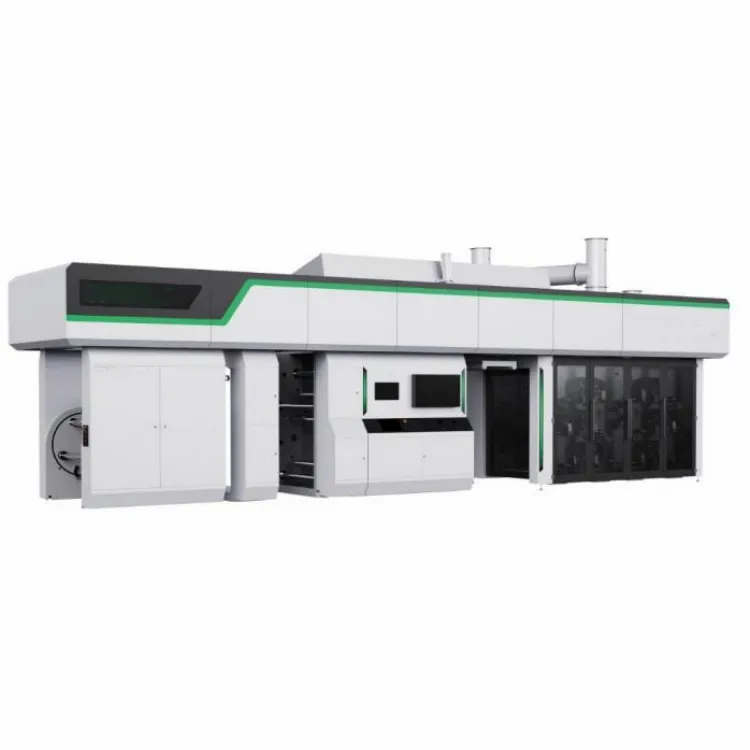
Based on the specific use scenario environment of the label, to determine what label material, glue and surface treatment process to use.
Make sure if there is a special labeling or storage environment requirements sticked to the object, to know the specific environment in which the label will be used.
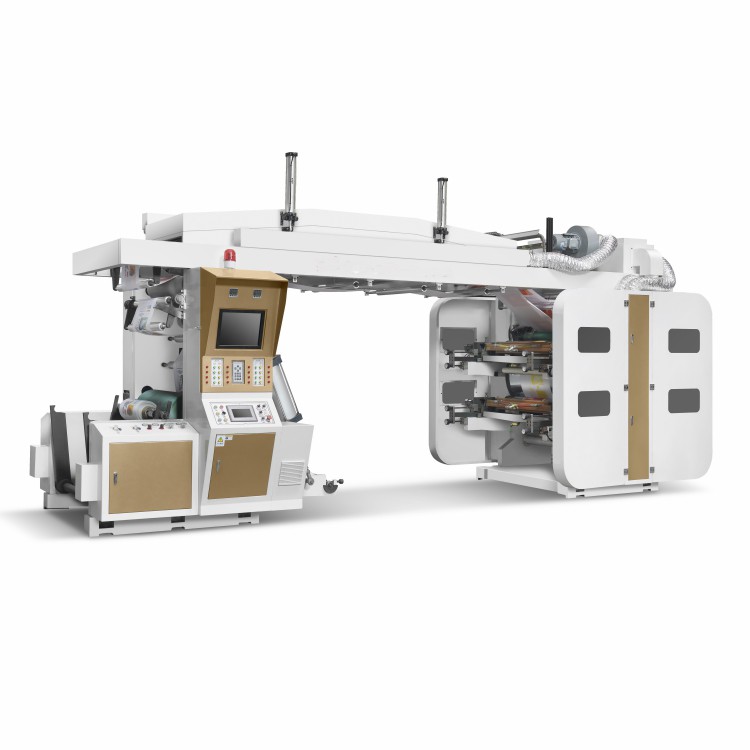
According to the product surface treatment, determine whether subsequent post-processing is required, especially when the end customer has requirements such as friction coefficient and static electricity.
According to the shape of the object (round, conical, spherical, glass, wood, carton and other media), determine what type of label material should be used, such as PP, PET, PE, synthetic paper, paper, etc.. If the labeling object is a small diameter bottle body, try to avoid using too high stiffness (such as PET or BOPP) materials to prevent the occurrence of buckling. If you must use them, you need to pass a small batch test before use.

Judge the material, color and shape of the object to be attached. Spherical objects or objects with high curved surface should be pass the test sticker, and should not use high stiffness material (such as PET or BOPP) rather than use softer material.
Wear resistance test. For plastic film materials in principle, it is recommended to take the varnishing process, especially like raw materials with poor wear resistance (such as PE materials, foam materials).
FAQ