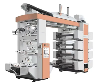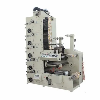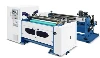
Prepare the printing plate. Firstly, it is necessary to prepare suitable flexible printing plate materials, such as polyester fiber, nylon fiber, etc., and make printing plates according to printing requirements. The printing plates need to be processed to form specific graphics, text, and blank areas.
Apply ink. Apply an appropriate amount of ink onto the printing plate to ensure that the ink evenly covers the image and text area. The viscosity and dryness of the ink should be selected according to the printing material and requirements.
Plate pasting. Fit the printing plate onto the printing roller to ensure a tight fit between the plate and the roller, and prevent leakage or blurring during printing.
Printing. By rotating the printing roller, the images and text on the printing plate are transferred to the substrate. During the printing process, it is necessary to maintain a constant speed of rotation to ensure printing quality.
Dry. Quickly dry the ink on the substrate through hot air, infrared, and other methods to fix the ink on the substrate.
Paper collection. Roll up the printed substrate material for subsequent processing or delivery to customers.
Cleaning. Clean the printing machine to remove residual ink and impurities, and prepare for the next printing.
In addition, before operating the flexographic printing machine, it is necessary to ensure that the machine is clean and free of impurities inside. Machine parameters such as printing speed, printing pressure, and ink volume may also need to be adjusted to achieve the best printing effect.
Mar 03, 2024
Leave a message
Process Flow Of Flexographic Printing Machine
Send Inquiry