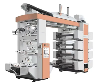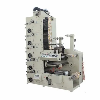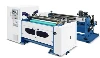
In gravure printing, drying system is the key to guarantee printing quality and improve production efficiency. However, with the increasing printing speed, the drying system faces numerous challenges such as increasing energy consumption, uneven drying and excessive solvent residue. Achieving a perfect balance between high speed printing and low energy consumption has become the core objective of the gravure printing press drying system. In this paper, the optimization strategies of the gravure printing press drying system will be discussed from three key factors: hot air, pipeline optimization, system control and new drying technologies.
I. The Three Elements of Hot Air: Precise Control of Drying Efficiency
The three core factors that affect the drying efficiency of gravure printing presses are the temperature of hot air, the velocity of hot air, and the concentration difference in the oven. Scientific control of these three elements can greatly improve drying speed while reducing energy consumption.
Hot air temperature: Hot air temperature directly affects the solvent evaporation rate. Experiments show that increasing the temperature of hot air in a reasonable range can accelerate solvent evaporation and shorten drying time. However, too high a temperature can lead to substrate deformation, a surge in energy consumption and even a safety hazards. Therefore, it is necessary to set the appropriate thermo-air temperature according to the characteristics of the substrate (e.g., plastic film is less heat resistance than paper). In general, plastic sheets are heating temperature to less than 100°C and paper to less than 160°C.
Hot Air Velocity: Hot air velocity is another key factor affecting drying efficiency. Increasing printing velocity can decompose solvent film on printing surface and promote evaporation and diffusion of solvent. At the same time, high velocity can accelerate the circulation of hot air and improve the heat efficiency. However, too fast will cause substrate vibration and ink smudging, affecting the quality of printing. Therefore, the optimal velocity range needs to be determined experimentally and precise velocity control achieved by optimizing nozzle design (for example, using "3D" efficient nozzles).
Oven Concentration Difference: A slight negative pressure in the oven is essential to reduce solvent residue and prevent exhaust gas leakage. Controlling differences in concentration in the furnace helps evaporate and remove solvents. Specifically, the optimization of exhaust system design can ensure a stable, micro-negative pressure environment in the dryer, while reducing exhaust gas leakage and improving drying efficiency.
ii. Piping Optimization: reducing wind resistance and improving energy efficiency
The piping layout of the drying system has an important effect on air velocity and pressure transmission. piping design will lead to increased wind resistance, reduced drying efficiency and increased energy consumption. Therefore, optimizing piping layout and reducing wind resistance are necessary conditions to improve the energy efficiency of the drying system.
Reduce bending and diameter changes: Bending and diameter changes are the main factors that increase wind resistance. In piping design, bending and diameter changes should be minimized, and straight pipe sections should be used to reduce wind resistance and increase air velocity.
Installation of Air Guide Plates: Installing of air guide board in key areas such as mixing box, air inlet, can guide the steady flow of hot air, reduce turbulence and turbulence, thus reducing wind resistance and increasing air velocity. The design of wind guide plate needs to be optimized according to pipe shape and hot air flow characteristics to ensure the most optimal wind guide effect.
Purpose of high efficiency air nozzle: Air nozzle is a part that directly touches the hot air to the printing substrate and its design directly affects drying efficiency. By changing the nozzle shape of the nozzle, the hot air can be distributed evenly, so as to improve drying efficiency and reduce energy consumption.
III. System control: Intelligent Adjustment, Precise Matching Traditional gravure printing press drying systems often depends on manual adjustment of operators, resulting in adjustment difficulties and inefficiency. With the development of intelligent control technology, it is possible to use intelligent control system to adjust the drying system system automatically.
Energy-saving optimization system: The energy-saving optimization system adopts a safe total volume control technology to determine the maximum amount of solvent evaporation in the gravure printing press. Calculate the safe air flow, control the total exhaust volume and ensure that the maximum concentration of the system is less than 25% LEL, as required by the safety specification. At the same time, the ESO system uses the maximum allowable temperature of the material under safe airflow conditions, combined with an increasing solvent evaporation process, to reduce solvent residue and improve drying quality. In addition, the ESO system monitors exhaust gas concentration online and adjusts the exhaust volume of the drying system accordingly to ensure that concentrations remain below safe limits and eliminate the risk of explosion.
Automatic Registration and Tension Control: During the drying process, the change in the tension of the printing substrate will affect the accuracy of the registration. By integrating automatic registration system and tension control system, the tension of printing substrate can be monitored and adjusted in real time to ensure that printing registration accuracy is not affected by drying process. At the same time, the automatic registration system can automatically adjust drying parameters according to the printing speed, so that the drying speed can match the printing speeds accurately.
IV. INTRODUCTION New Drying Technologies: Exploring New Paths of High Efficiency and Energy Saving
In addition to traditional hot air drying technology, new drying technologies such as infrared drying, ultraviolet drying and electron beam drying also provide new ideas for the optimization of gravure printing press drying systems.
Infrared Drying: Infrared drying uses infrared radiation to heat ink on the surface of a printing substrate to make it dry quickly. Infrared drying has advantages of high drying speed, low energy consumption and little effect on printing substrate. However, infrared drying itself can lead to uneven drying and is often used in combination with hot air drying to take advantage of each.
UV Curing: UV curing technology uses ultraviolet light to trigger light initiators in the coating, producing active free radicals or ionic radicals that trigger polymerization, crosslinking and grafting, transforming the coating from liquid to solid in seconds. UV curing has the advantages of fast curing, low-temperature curing, energy saving and so on, especially for high-speed gravure printing presses with high drying speed.
Electron Beam Drying: Electron beam drying uses high-energy electron beam shock coating to convert its kinetic energy into thermal energy for rapid drying. Electron beam drying has the advantages of fast drying, strong permeability and no thermal damage to the substrate. However, electronic beam drying equipment is relatively expensive and is currently mainly used in high-end printing applications. In the future, with the development of technology and the decrease of cost, electron beam drying will be widely used in gravure printing press drying systems.
Apr 01, 2026
Leave a message
Optimization Of Gravure Printing Press Drying System: Final Solution For Balancing Speed, Wear And Energy Consumption
Send Inquiry