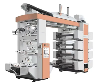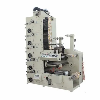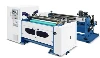
The main components of a plastic film roll laminating machine usually include the following key modules, which work together to achieve efficient and stable laminating processing:
1.Unwinding system
Function: Responsible for removing the substrate (such as plastic film, paper, aluminum foil, etc.) from the drum and transferring it to the next process.
Composition:
Stretch: Support roller, usually equipped with tension control device.
Calibration device: Ensure the substrate remains aligned during transport to avoid deviations.
Tension controller: Adjust tension through magnetic or pneumatic brakes to ensure smooth transport of substrates.
2.Coating system
Function: Apply adhesive evenly on the substrate surface to prepare for the laminating process.
Composition:
Coating head: Adopt anilox rollers, scraper or comma roller to achieve precision coating bonding.
Glue tank: Stores the adhesive and delivers it to the coating head via a pump system.
Drying device: Dry or hot air circulation system for evaporating and curing solvents in binders.
3.Composite systems
Role: The coated substrate is pressed on a layer of substrate (such as plastic film, aluminum foil, etc.) to form a composite material.
Composition:
Composite roller: usually a pair of heated steel rollers or rubber rollers, substrate by pressure and temperature bonding.
Pressure regulating device: Adjusts the pressure between the compound rollers to ensure the composite strength.
Temperature control system: Accurate control of the temperature of the compound roller to meet the curing requirements of different adhesives.
4. Winding system
Function: Roll the composite material into a roll for subsequent processing or storage.
Composition:
Curling frame: Supports winding scrolls, usually equipped with tension control device.
Tension controller: adjust winding tension by magnetic powder clutch or torque motor to avoid material deformation or breakage.
Instrument: Recording the length of roll back for easy production management.
V. Transmission systems
Function: Drives each drum and conveyor device, ensures the substrates synchronous conveyance.
Composition:
Main motor: Provides power, usually frequency-varying speed regulating motor.
Speed reducer: Reduce motor speed and increase torque.
Drivetrain / belt: Connect rollers to keep them in sync.
6. Control system
Function: Monitor and adjust the operation parameters of equipment, ensure the stability of production process and product quality.
Composition:
PLC (Programmable Logic Controller): Realize automatic control of equipment.
Human-machine interface: Operator set parameters and monitors operation status through touch screens.
Sensors: Detect parameters such as pressure, temperature, speed, etc., and feed back to control system.
7. Auxiliary system
Function: support the normal operation of equipment, improve production efficiency and safety.
Composition:
Cooling system: Cooling compound roller or motor to prevent overheating.
Exhaust gas treatment device: deal with harmful gas produced during coating process, meet environmental protection requirements.
Safety equipment: such as shields, emergency brake buttons, etc., to ensure the safety of operators.
Abstracts
Plastic sheet machine and transmission system, control system, auxiliary system through coils, coating, layering, winding and other core modules work together to achieve efficient and stable compound processing. The design and configuration of each component has a direct impact on the performance and quality of the equipment and therefore needs to be optimized for specific needs when purchased and used.
Jul 15, 2025
Leave a message
What Are The Main Components Of A Plastic Film Roll Laminating Machine?
Send Inquiry